
Who We Serve
Disability support for children, teens and adults
You might be arranging support for yourself. You might be a parent looking for help for your child. Both of you are in the right place. We build support with the person who receives it — at home, across Tampa Bay.
How We Work
Support built around you, not a diagnosis
Two people with the same diagnosis can want completely different days. So we do not start there. We start with the person, and we ask.
If the support is for you, the plan is yours to direct. If you are a parent, we build it with you and with your child, at whatever level your child takes part. Support is something we do with a person. Never something we do to them.
We start with what you already do
The first conversation is about an ordinary day. What you handle yourself. What you want a hand with. What you would rather nobody touched. Support fills the gaps you name, and stops there.
Your routine stays your routine
Routines and ways of communicating are how your day works. We learn them and we keep to them. We do not swap them for ours because ours is quicker.
The caregiver follows your lead
A caregiver supports what you are doing. They ask before they help. They wait when you want to do it yourself. When the plan needs to change, you are the one who changes it.
Two Readers, One Agency
What support looks like
The work is different for an adult running their own home and for a family with a child at school. Here is each of them, plainly.
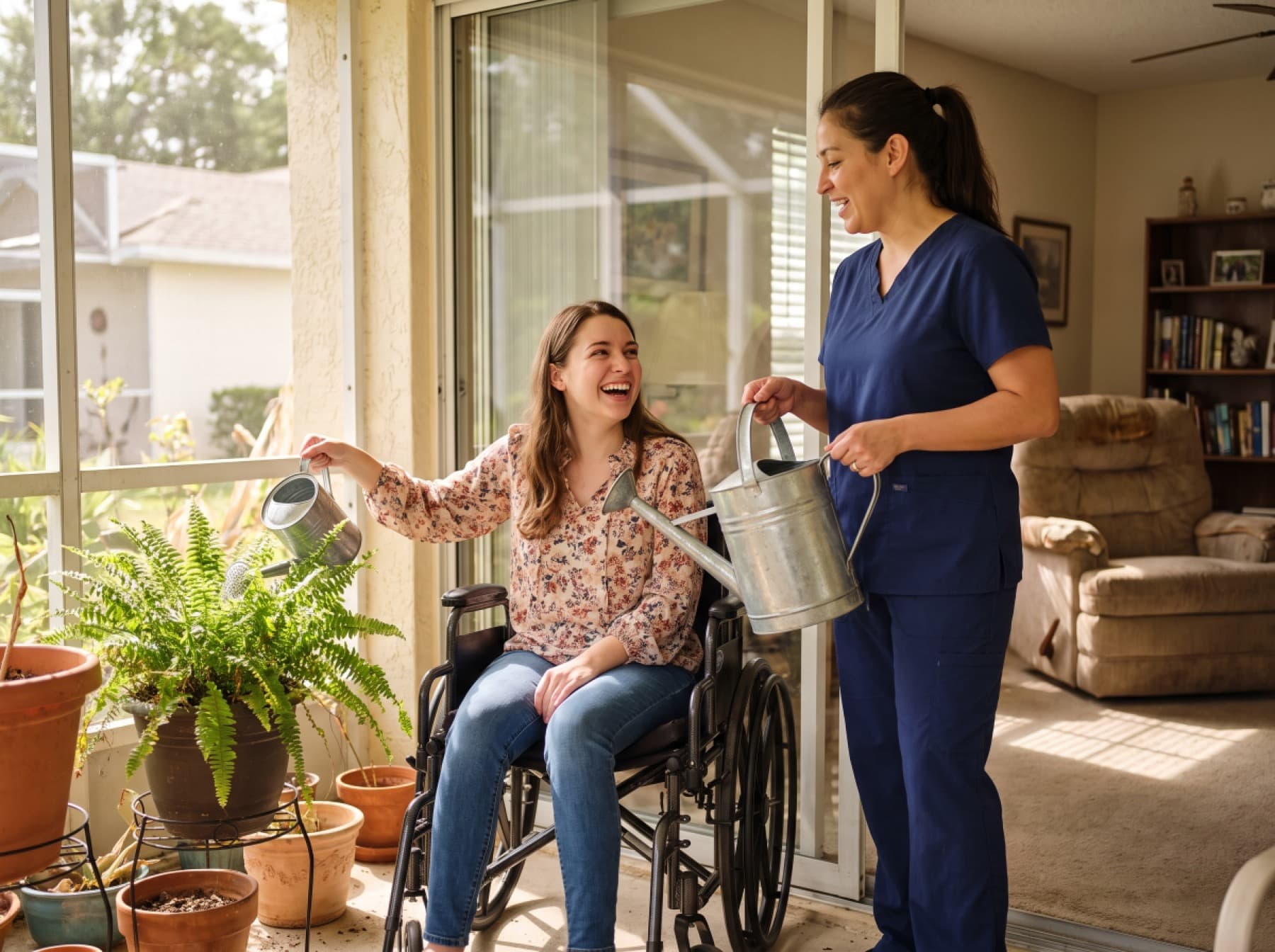
For adults
You decide how your day runs
Support for adults living at home, with family, or in shared housing. You set the hours, the tasks and the pace. We show up and do the job you hired us for.
- Help at home on your terms — washing, dressing, meals and the house, done the way you want them done.
- Getting out. The shops, the gym, a friend's place, your place of worship. Community time is part of the job, not an extra.
- Work, college and volunteering — a ride there, support while you are there if you want it, and space when you do not.
- Company that is actually company. Someone to share a hobby with, not someone watching you.
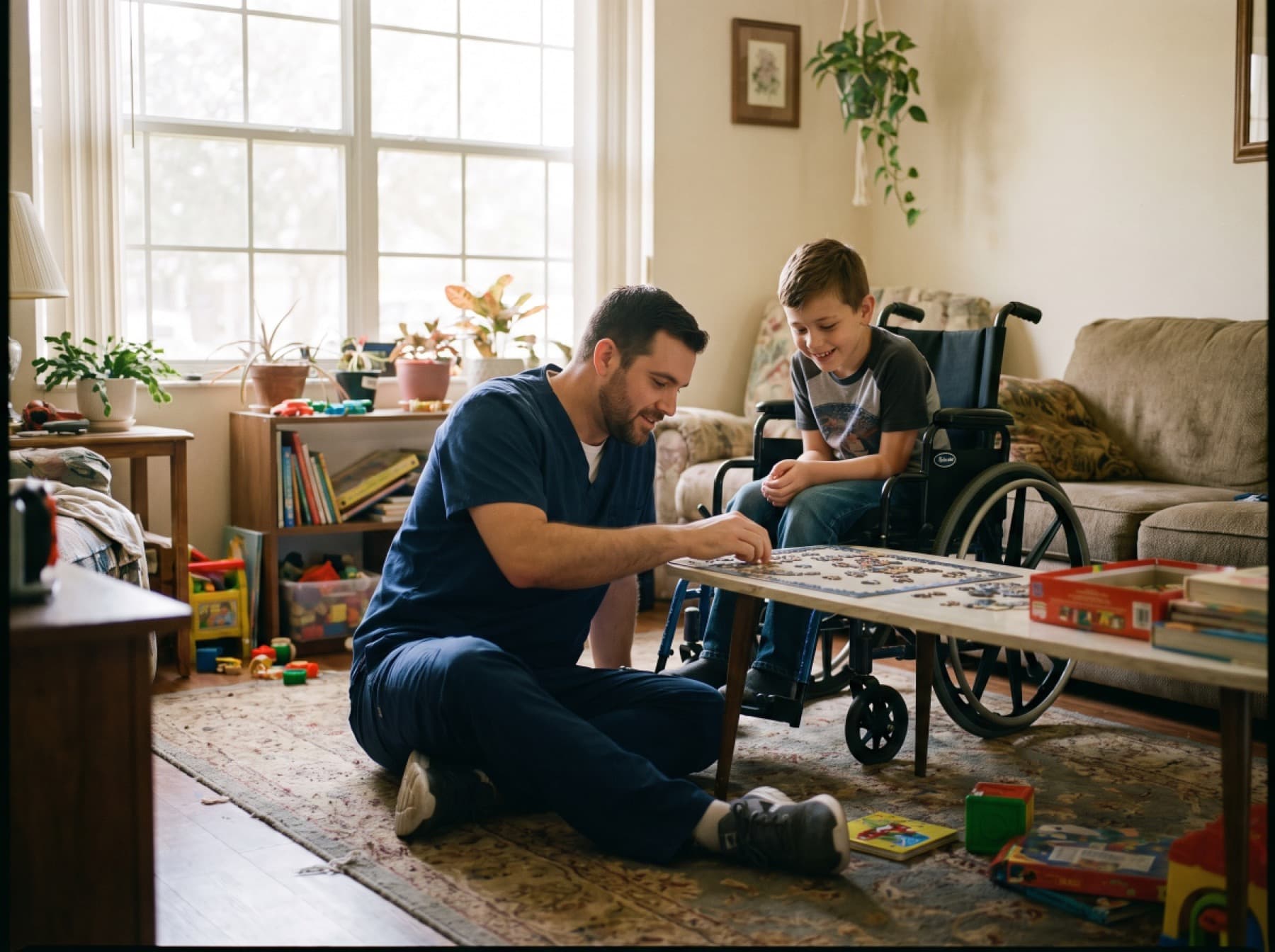
For children and teens
Your child’s day, kept steady
Support for parents of a disabled child or teen. You know what works at home. Our job is to keep that going in the hours you cannot cover, and to give you a real break.
- Cover for the hours that never line up — after school, early mornings, school holidays and teacher planning days.
- The routine you already run, run the same way. We follow your instructions rather than a generic plan.
- Sensory-aware support. Tell us what helps and what to avoid — noise, light, food, touch — and we work inside those lines.
- Respite so you can rest, keep your own appointment, or spend an afternoon with your other children.
Somewhere between the two? Plenty of the people we support are. A young adult moving out for the first time is neither of the columns above. Call and we will work it out with you.
Our Services
How we help
Every service below is available to the people we support on this page. The line under each one is what it means in a disability context — not the senior version with a word swapped.
Personal Care
Bathing, dressing, grooming and daily hygiene assistance.
For a disabled adult, this is about autonomy, not supervision. You decide the routine, the order and the level of help; the caregiver follows your lead and does not improvise on your body.
See personal careCompanionship
Conversation, shared activity and genuine company.
For a disabled adult, this is company on your own terms — someone to share a hobby with, or sit alongside without being managed. Support, not supervision.
See companionshipMeal Preparation
Planning, shopping and cooking around real preferences.
Cooking together is a skill-building activity, not just a task to be done for someone. Where the goal is independence, we work at your pace and step back as you take more of it on.
See meal preparationMedication Reminders
Timely prompts and clear notes back to the family.
For a person on a long-term regimen, the value is reliability and a routine that does not shift. Prompts fit around your day rather than interrupting it.
See medication remindersLight Housekeeping
Keeping the home clean, safe and navigable.
Clear, predictable layouts matter. We keep things where you put them and do not reorganize your home to suit us.
See light housekeepingRespite Care
Planned or short-notice cover so family carers can rest.
Parents of disabled children and partners of disabled adults often go years without a break. Respite is built around your child's or partner's actual routine, sensory needs and communication, so time away does not cost more than it gives.
See respite careRecovery Care
Short-term help after a hospital stay or surgery.
A hospital stay disrupts routines that took years to build. We work to restore the routine you had, not to impose a recovery plan that ignores it.
See recovery care
The Match
Getting the right caregiver
This matters more here than anywhere else we work. Support is close, it is regular, and it only works when the two people actually get on.
A caregiver who is good at the tasks and wrong for the person is still the wrong caregiver. So we treat the match as part of the job, not as scheduling.
Start with a free consultationWe ask before we match
What do you like doing? How do you prefer to communicate? What kind of person do you get on with, and what kind grates? Quiet or chatty? These are not small talk — they decide who we send.
We keep the same person where we can
Support works better when nobody has to explain themselves again every week. We build schedules around keeping the same caregiver on the same visits. When that person is away, we tell you who is covering and we tell you as soon as we know — not when they knock on the door.
We check in after the first visits
A short call to ask how it went — to you, and to your family if you want them involved. Early is when a mismatch is cheapest to fix.
If it is not working, we change it
Say the word and we find someone else. You do not have to give a reason, list examples, or wait until it becomes a problem. Not clicking with someone is reason enough.
Safety and Respect
How we operate
Nothing dramatic here — just what we do, so you can hold us to it.
Licensed and background checked
Our caregivers are experienced and background checked. Dreams Come True Tampa Corp is licensed in Florida as a Home Health Agency, License #299995525.
You can look that license up yourself on the state’s public register.
Personal care follows your preferences
You say what help you want with washing, dressing and the bathroom, and in what order. Caregivers ask before they help and they do not improvise. Your body, your call.
You hear what happened
Caregivers write up each visit — what got done, what was eaten, anything that seemed off. Families who want those notes get them, so nobody is guessing about the hours they were not there.
Concerns get acted on
Raise something and a person in our Tampa office looks into it and tells you what came of it. Small things are worth calling about. They are usually the early version of a bigger one.
One line worth saying plainly: our caregivers give medication reminders. They prompt at the right time and write down what was taken. They do not administer medication.
How Payment Works
Let’s talk about what this would cost
What support costs depends on how many hours you need and what kind of help is involved, so any figure printed on a website would be wrong for most families. Ways of paying differ too, and which ones apply depends on your situation.
The fastest way to get a straight answer is to ask us. Tell us what you need and we will explain what it would cost and how payment would work for you. The consultation is free and there is no obligation.
Mon–Fri, 8:30 AM – 5:00 PM — you will reach a person in our Tampa office.
Common Questions
Questions we get asked
Do you support adults, or only children?
Both. We support children, teens and adults. A good part of our disability work is with adults living in their own homes, with family, or in shared housing. Adult support is not a smaller version of children's support — it is a different job, and we treat it that way.
Can my son keep the same caregiver?
That is what we aim for, because a new face every few weeks undoes the work. We build schedules around keeping the same person on the same visits wherever we can. Illness and holidays still happen — when your regular caregiver cannot make a visit, we tell you who is covering it, and we tell you as soon as we know.
Will you follow the routine we already have?
Yes. Your routine is not an obstacle we work around — it is how the day works. Tell us the order, the timing and the words you use, and we follow them. If something in the routine needs to change, that is your call to make, not ours.
Can I arrange support for myself?
Yes, and many people do. If the support is for you, you are the person we plan it with. You decide what help you want, when it happens and how it is done. A parent, guardian or support coordinator can start the conversation, but the plan belongs to you.
How do people pay for this?
Most of the people and families we work with pay privately, often starting with a few hours a week. Funding for disability support in Florida also runs through several different programs, and each has its own rules about which providers it can pay — so ask us on the call and we will tell you straight whether yours can be used here. If you work with a support coordinator or case manager, bring them in; we are glad to talk to them directly.
How quickly can support start?
In most cases we can visit within one to two business days of your call, and start that same week. Short notice is worth asking about too — a hospital discharge or a support arrangement that has just fallen through does not wait for a tidy schedule.
What if the caregiver is not a good fit?
Tell us and we will change it. You do not have to explain why, and you do not have to soften it. A match that is not working is information we need, not a complaint. We would rather hear it in week one than lose your trust over six months.
Also helping an older parent?
Plenty of families we work with are doing both at once — a disabled adult child and an aging parent, in the same week. The senior page covers what that side looks like, and one plan can cover both.
Tell us what would help
Call or request a callback. The consultation is free, and there is no obligation to book anything.